Georgia Tech Experimental Rocketry · 2025-2026
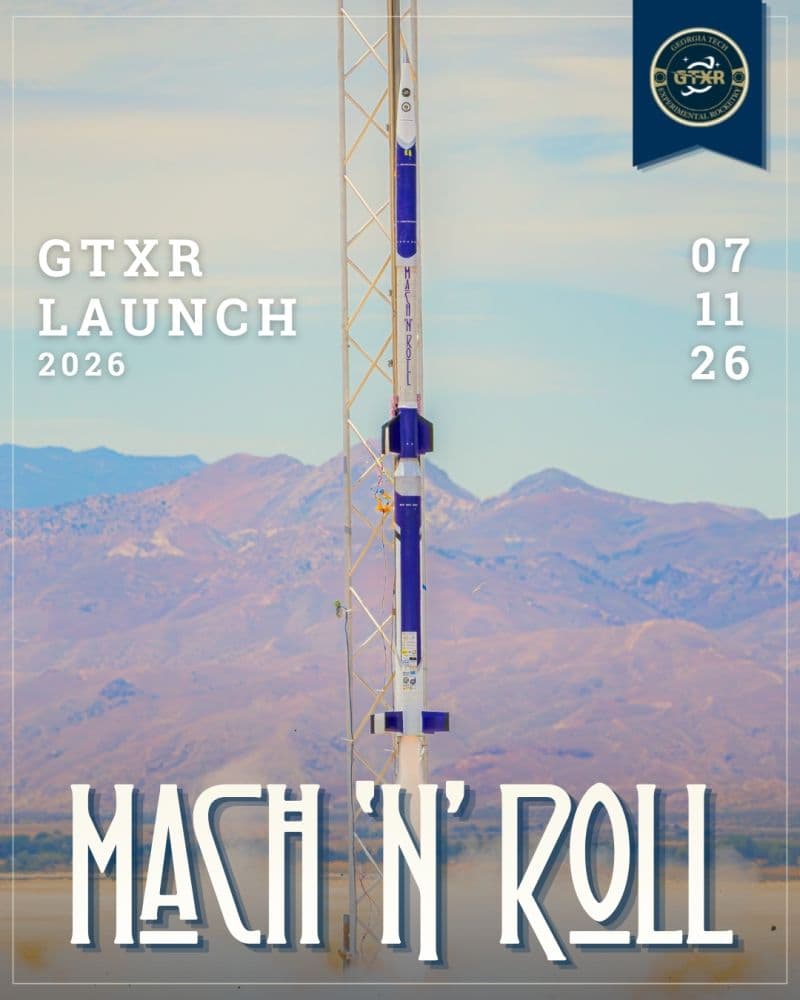
GTXR: Mach 'N' Roll
I developed machine-learning fin-flutter surrogates that accelerated genetic rocket-configuration optimization.
Expanded technical stack
Overview
Our simulations team evaluates candidate configurations for a high-altitude student rocket. Fin-flutter analysis was a major bottleneck inside the genetic optimization loop.
My contribution
I developed machine-learning surrogate models for fin-flutter prediction and integrated them into a genetic rocket-configuration optimizer.
Challenge
A roughly one-minute flutter evaluation made population-scale rocket configuration search impractical, so I needed a faster way to screen candidates.
Technical approach
I trained and integrated an ML surrogate for fin-flutter prediction so the genetic optimizer could screen candidate rocket configurations without invoking the expensive full flutter evaluation each time.
Result / outcome
I reduced each fin-flutter candidate evaluation from approximately one minute to under one second, cutting the evaluation cost by roughly two orders of magnitude. Integrating the ML surrogate transformed fin-flutter prediction from a major optimization bottleneck into a practical calculation to repeat throughout the genetic search. The optimizer can now evaluate far more candidates within a practical compute and time budget, enabling broader design-space exploration and strengthening the team's ability to optimize the overall rocket configuration.