Independent engineering build · 2025
Autonomous 3D-Printed Pacing Drone
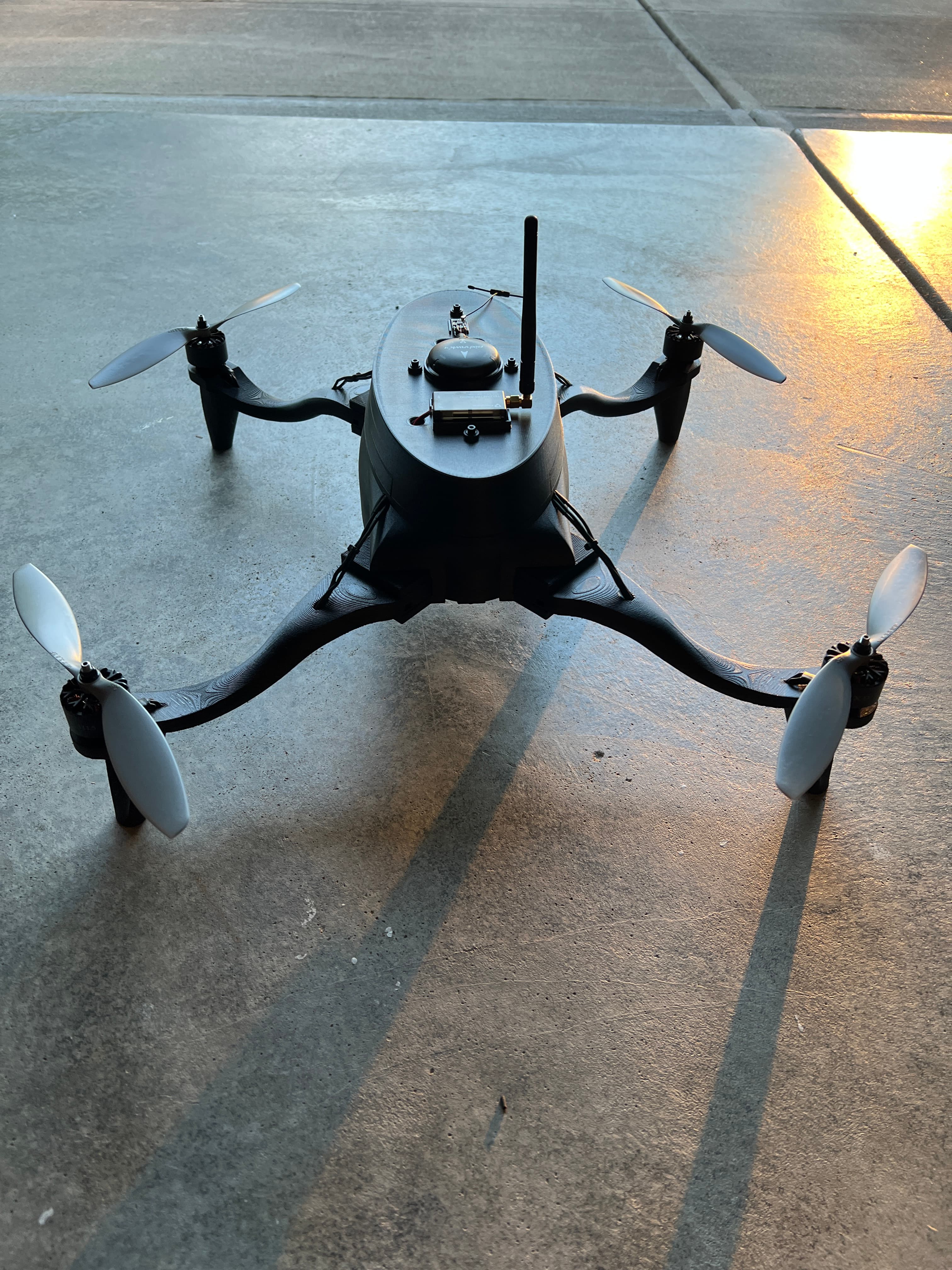
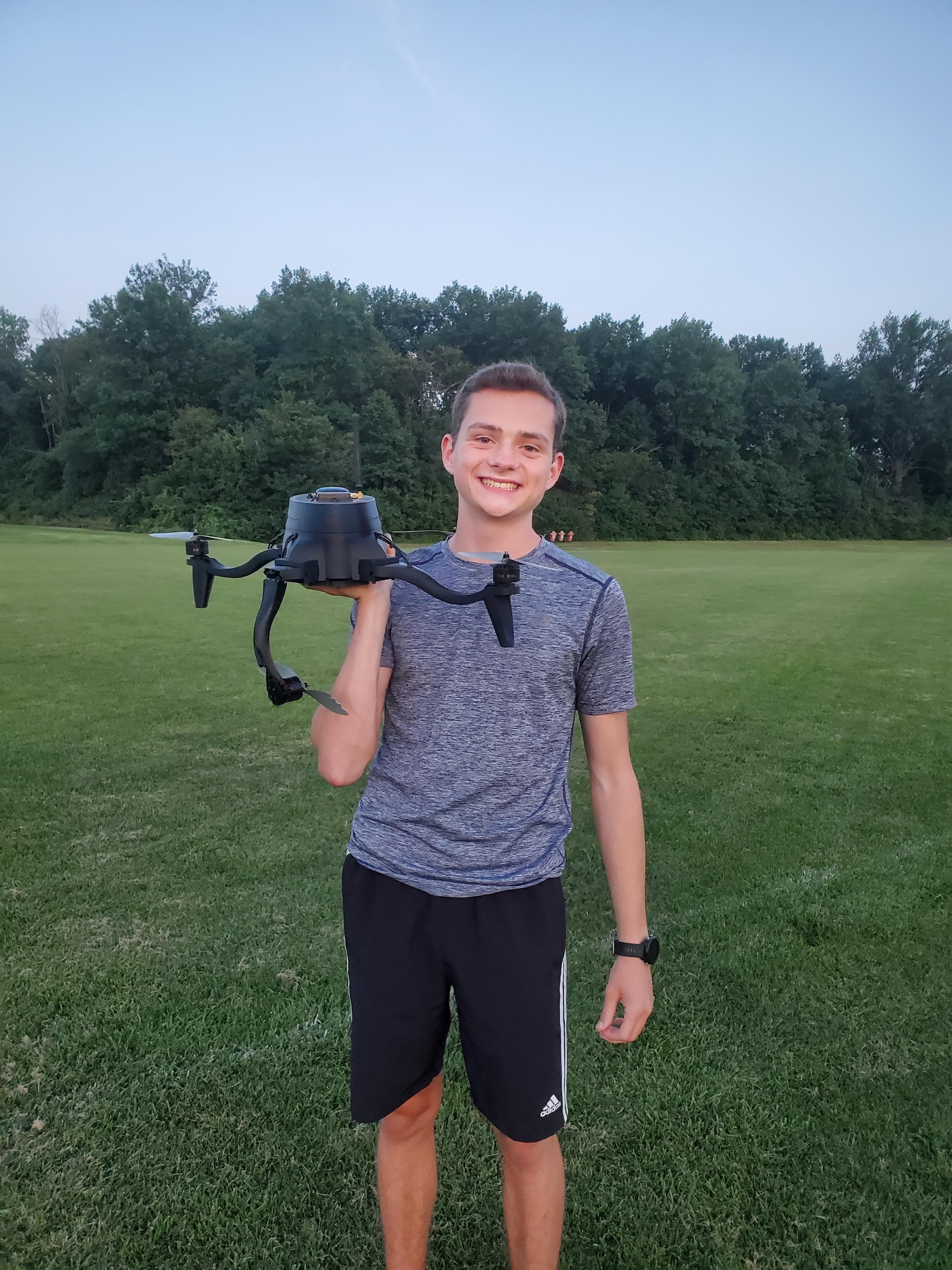
I designed, fabricated, wired, integrated, and flight-tested a custom autonomous quadrotor spanning roughly three feet from propeller tip to propeller tip and weighing about seven pounds fully assembled.
Expanded technical stack
Overview
I set out to build a large autonomous pacing aircraft that could execute programmed paths. The project combined airframe design, additive manufacturing, power electronics, flight-control integration, structural analysis, debugging, and outdoor test operations.
My contribution
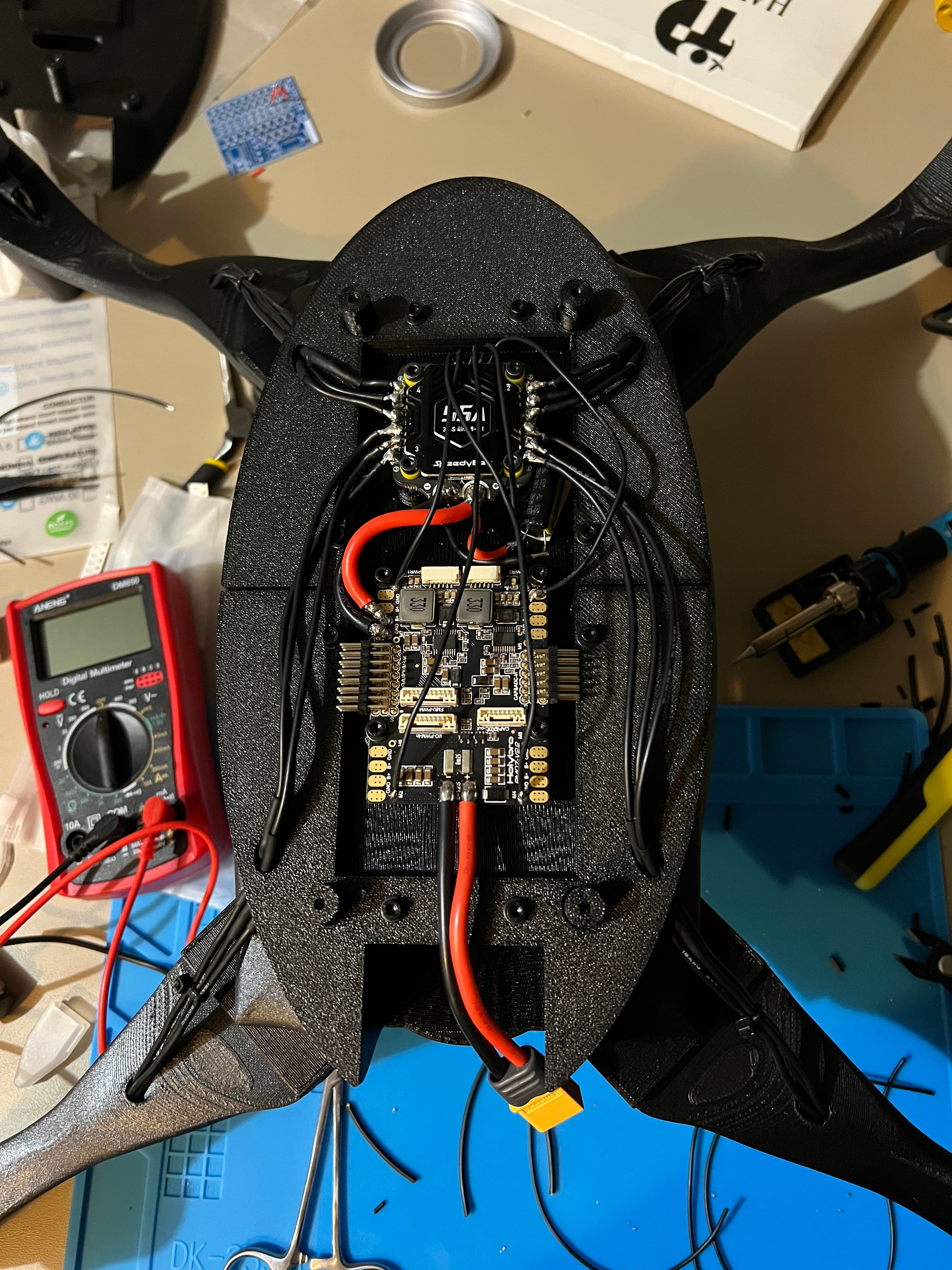
I designed and fabricated the custom airframe, wired and integrated the electronics and propulsion system, configured ArduPilot and Mission Planner waypoint paths, and carried the vehicle through failure investigation and flight test.
Challenge
I needed the 3D-printed structure to support the loads, electronics, and propulsion system of a completed vehicle spanning roughly three feet from propeller tip to propeller tip and weighing about seven pounds fully assembled.
Technical approach
I used Fusion 360 finite-element analysis and spherical infill modifiers, which increased predicted arm strength by 17%. I integrated ArduPilot and Mission Planner, debugged a failed MOSFET, and iterated from bench work through programmed flight paths.
Result / outcome
Starting without prior drone-building experience, I conceived and built a custom autonomous quadrotor from a blank sheet, producing a roughly seven-pound aircraft spanning approximately three feet from propeller tip to propeller tip. I personally carried the vehicle through CAD, finite-element analysis, structural design, 3D-print fabrication, propulsion and power-system selection, electronics wiring and debugging, ArduPilot and Mission Planner integration, and programmed waypoint configuration. The integrated aircraft completed two outdoor flights to approximately 25 feet, demonstrating physical operation of the custom airframe, propulsion, electronics, and flight-control stack. I diagnosed failures including a failed MOSFET, converted a flight-test arm failure into structural test data, and used that evidence to drive the next airframe iteration, completing a full concept-design-build-test-redesign cycle on a multidisciplinary aerospace system.
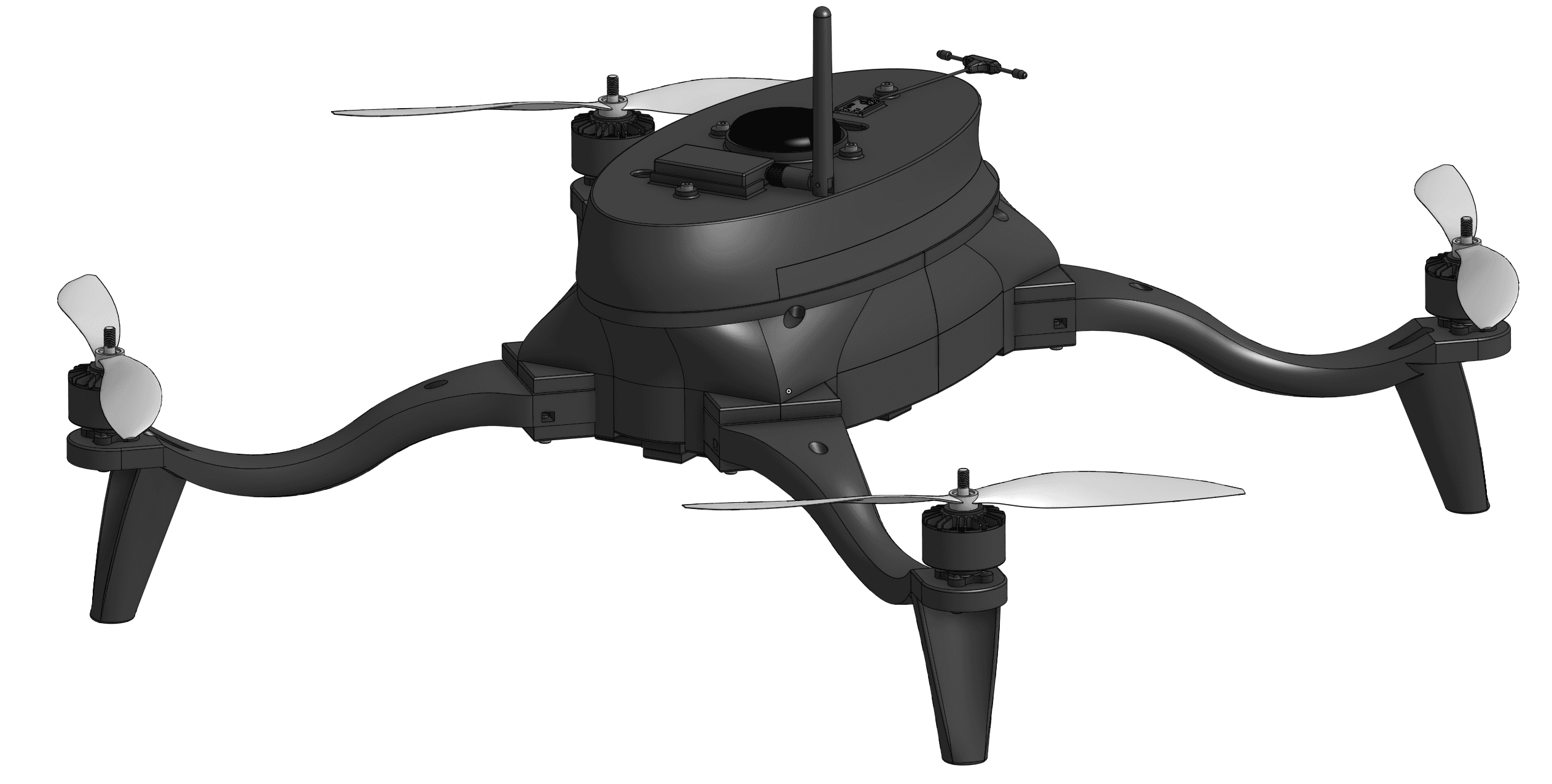
Inspect the airframe.
This model shows the custom 3D-printed airframe and its integrated electronics and propulsion. Rotating it connects the CAD design to the vehicle I fabricated and flight-tested.
Drag to rotate. Scroll or pinch to zoom.
Loading 3D modelGallery / media
Selected artifacts